The Ultimate Bombanana Story Guide: How to Defuse With Friends
Master the chaotic Bombanana story with our expert guide. Learn strategies for blind, deaf, and mute roles to solve puzzles and survive the ultimate co-op test.
Published:
Table of Contents
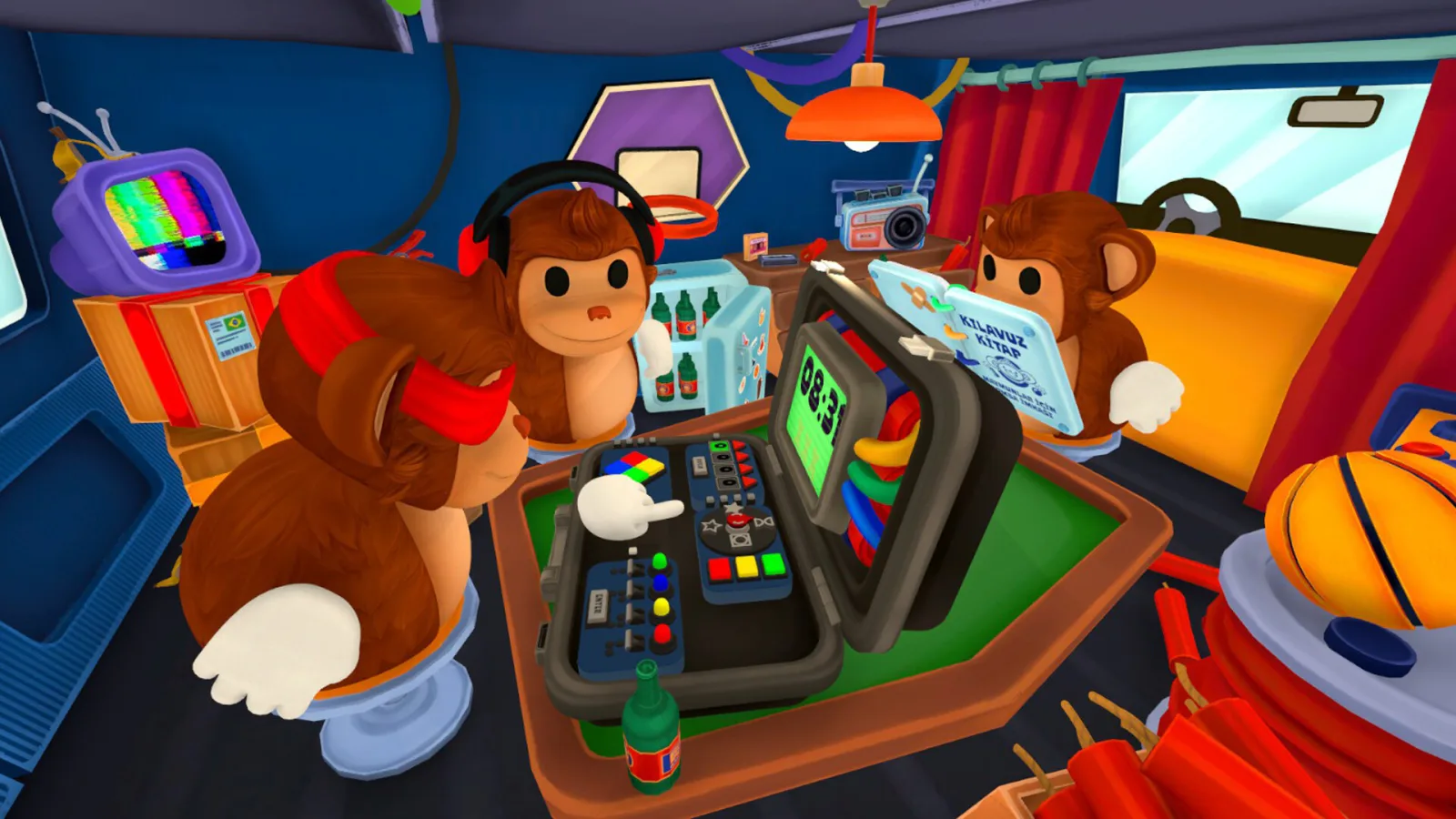
Imagine being trapped in a minivan with a ticking explosive, and your only hope for survival is a team of monkeys who can’t see, hear, or speak properly. This is the core premise of the bombanana story, a game that takes asymmetric cooperation to a level of stress usually reserved for bomb disposal units and dysfunctional family dinners. Developed by Lefto Studio and published by TARK, this title has quickly become a standout in the "anti-friendslop" genre, challenging players to communicate through chaos rather than clear dialogue.
In this comprehensive guide, we will dive deep into the bombanana story to help you and your friends navigate the 30 handcrafted campaign levels and the grueling endless mode. Whether you are the one holding the manual or the one frantically cutting wires, understanding the nuance of each role is the difference between a successful defusal and a very loud, banana-scented explosion.
Quick Answer
Success in the game requires three players to adopt specific handicaps: the Blind Monkey (interacts but can't see screens), the Mute Monkey (reads the manual but can't speak), and the Deaf Monkey (sees everything but can't hear). The key is establishing a non-verbal "language" using slaps, emotes, and rhythmic gestures to relay information from the manual to the bomb interface.
The Three Pillars: Understanding Roles in the Bombanana Story
The brilliance of the bombanana story lies in its forced dependency. Unlike other co-op games where one player can carry the team, this game mandates that all three monkeys function as a single, albeit broken, brain. If one player fails to communicate their specific piece of information, the timer will inevitably reach zero.
The Role Breakdown
To succeed, you must understand the limitations and responsibilities of each squad member. Community reports suggest that teams who rotate roles frequently have a higher success rate because they understand the frustrations of their partners.
Role
Vision
Audio
Interaction
Primary Responsibility
Blind Monkey
None (Black screen)
Full Audio
High (Bomb & Objects)
Manipulating modules, cutting wires, and pressing buttons based on instructions.
Mute Monkey
Full Vision (Manual only)
Full Audio
Low (Manual Navigation)
Reading the defusal steps and providing the logic for every puzzle module.
Deaf Monkey
Full Vision (Bomb & Friends)
None (Muted audio)
High (Gestures & Slaps)
Acting as the bridge; observing the bomb's state and relaying the Mute Monkey's instructions via gestures.
The Blind Monkey: The Hands of the Operation
As the Blind Monkey, you are the only one who can actually "touch" the bomb modules. However, your screen is pitch black. You must listen to the Mute Monkey's voice (if voice chat is enabled for you) or respond to the physical cues of the Deaf Monkey. You are the executor. When the team says "cut the third wire," your precision determines everyone's fate.
The Mute Monkey: The Brains of the Operation
You have the most important tool: the Bomb Disposal Manual. You can see the logic, but you cannot speak to the Blind Monkey directly in many game modes, or you are restricted by the game's internal "Mute" status. You must use the emote wheel and gestures to tell the Deaf Monkey what needs to be done.
The Deaf Monkey: The Eyes of the Operation
You see the bomb, the timer, and the frantic flailing of your teammates. Because you cannot hear, you must be hyper-aware of visual cues. If the Mute Monkey is pointing at a specific color in the air, you need to translate that into a command for the Blind Monkey.
Navigating the Modules: Logic and Tactics
The bombanana story features a variety of modules that range from simple wire-cutting to complex mathematical equations and musical recitals. Each module has a specific set of rules found in the manual, but the environmental hazards—like power outages or loud interruptions—often make reading those rules difficult.
Module Type Overview
Module Name
Visual Cues
Requirement
Common Pitfall
Wire Sequence
3-5 colored wires
Cut specific wire based on light color.
Cutting based on position without checking the indicator light.
The Calculator
Digital display + Math
Solve equation and input specific digit.
Forgetting to check if the answer should be even, odd, or a specific digit.
Arcade/Arrows
D-pad style buttons
Input a sequence of directions.
Misinterpreting "Left" and "Right" from the monkey's perspective.
Piano Recital
Musical keys
Play notes (e.g., C6, G6) in order.
Mixing up the octave numbers (e.g., playing C5 instead of C6).
Shape/Sound
Symbols & Ticking
Identify the symbol making a sound.
Rotating the pointer too fast and missing the auditory "tick."
Mastering the Wires
One of the first challenges in the bombanana story is the wire module. The manual might say: "If there is a red light and four wires, cut the second wire if it is blue." The Mute Monkey sees this, but the Blind Monkey doesn't know the color of the light or the wires.
Pro-Tip from Player Experience: The Deaf Monkey should use the emote wheel to signal the light color immediately. A red heart emote can signify a red light, while a blue circle can signify a blue light. This saves precious seconds on the timer.
The Calculator and Math Puzzles
Community reports often highlight the "Math Module" as a run-killer. You might see an equation like 57 + 13. While the answer is 70, the manual might instruct you to input the second digit if the light is yellow.
Common Error: The "Math Trap"
Many players rush to input the sum of the equation. Always wait for the Mute Monkey to confirm the "Logic Step." The answer to the math is rarely the answer you actually input into the keypad.
Advanced Communication: Developing a "Monkey Language"
Since the bombanana story is designed to limit traditional communication, successful teams develop their own shorthand. Slapping, for instance, isn't just for fun—it can be a vital signaling tool.
Non-Verbal Signaling Table
Action
Common Meaning
Alternative Meaning
Single Slap
"Yes" or "Proceed"
"You're doing it wrong!"
Double Slap
"No" or "Stop"
"Hurry up, time is low!"
Spinning in Circles
"Next module"
"I am confused."
Pointing Up/Down
Directional input
Signaling a specific wire (Top/Bottom)
Banana Throw
"Look at this"
Distraction/Panic
According to players, the most effective teams use a "Left-to-Right" numerical system. When referring to wires or buttons, always count from the left. This prevents the "my left or your left" argument that frequently leads to a "Game Over" screen.
Level Progression and Environments
The campaign consists of 30 levels. While the early levels take place in a relatively calm minivan, later stages introduce environmental hazards that test your focus. For more information on the game's release and updates, you can visit the official BOMBANANA! Steam page, which is the primary hub for the community.
Environmental Hazards to Watch For:
Power Outages: The lights go out, leaving even the Deaf Monkey in the dark. Only the Blind Monkey's tactile feedback remains useful.
Loud Interruptions: Screaming fans or engine noises that drown out the Mute Monkey's voice chat, forcing a total reliance on gestures.
Obstructions: Objects falling in front of the bomb, requiring the Deaf Monkey to physically move to see the modules.
The Endless Mode
Once you finish the main bombanana story, Endless Mode offers procedurally generated bombs. The difficulty scales by adding more modules and reducing the time limit. Statistics from the community show that most teams fail around "Wave 10" due to the introduction of the Piano and Braille modules simultaneously.
Tips for High-Pressure Defusal
To keep the bombanana story from ending in a blowout, follow these veteran strategies:
Prioritize the "Ticking" Modules: Some modules, like the Shape/Sound module, have their own internal timers or sound cues. Handle these first before moving to static modules like Wires.
The Mute Monkey Must Lead: Even though they can't speak, the Mute Monkey is the only one with the "source of truth." The other two monkeys should never act until they receive a signal from the Mute.
Stay Calm During Slaps: Slapping is a mechanic intended to be chaotic. Don't let a stray slap tilt you; often, it's just the Blind Monkey trying to find the interaction hitbox.
Use Color-Blind Mode: The developers included a robust color-blind mode. If your team is struggling with the red/green wire distinction, enabling this in the settings can be a literal lifesaver.
Calibration is Key
Before starting a high-level campaign run, spend 30 seconds in the lobby calibrating your gestures. Agree on what "thumbs up" and "thumbs down" mean for specific modules like the Calculator.
Why the Bombanana Story Resonates with Players
The game is often described as an "argument simulator," and for good reason. It strips away the comfort of clear communication and replaces it with desperate body language. The bombanana story isn't just about defusing a bomb; it's about how well you know your friends' thought patterns.
When you finally defuse a level with only two seconds left on the clock, the rush of adrenaline is unparalleled. It turns a simple puzzle game into a legendary tale of survival—or a hilarious story of how your best friend accidentally blew you up because they couldn't tell a triangle from a square.
FAQ: Frequently Asked Questions about Bombanana
Can you play the bombanana story with only two players?
No, the game is strictly designed for a 3-monkey co-op experience. The roles of Blind, Mute, and Deaf are hard-coded into the gameplay loop, and the puzzles require three distinct streams of information to be solved. Trying to play with fewer would make the modules mathematically impossible to solve under the time limit.
What is the hardest module in the bombanana story?
Most players consider the Piano Module or the Braille Module to be the most difficult. The Piano requires specific note sequences (like A6, B6, G6) which are hard to relay through gestures, while the Braille module requires the Mute Monkey to translate tactile dots into numbers that the Blind Monkey can understand through sound or vibration.
How do I unlock new environments in the campaign?
New environments, such as the Plane or the Laboratory, are unlocked by completing sets of levels in the Campaign mode. Each environment introduces new hazards. For example, the Plane environment features turbulence that can physically move the monkeys, making it harder for the Deaf Monkey to keep their eyes on the bomb.
Is there a way to practice modules without a timer?
Yes, the Custom Mode allows players to adjust the bomb difficulty and the timer. If your team is struggling with the bombanana story logic, you can set the timer to "Infinite" to practice communication strategies for specific modules like the Calculator or the Wire Sequences without the pressure of an imminent explosion.
What happens if we make a mistake?
Most bombs allow for two mistakes (marked by "X" indicators). The third mistake results in an immediate explosion. However, in higher difficulty levels and certain Custom Mode settings, a single mistake can trigger the bomb. Successful defusal requires absolute precision and confirmation before any wire is cut or button is pressed.