Mastering the Bombanana Simon Says Manual: Expert Co-op Guide
Struggling with the Bombanana Simon Says manual? Discover expert strategies for team communication, module solving, and defusing bombs like a pro.
Published:
Table of Contents
BOMBANANA! has quickly become the definitive test of friendship and communication, challenging teams to defuse high-stakes bombs under intense pressure. If you are struggling to coordinate your team's efforts, mastering the bombanana simon says manual is your first step toward consistent victories. Understanding how to interpret the rules and relay them effectively is the difference between a successful mission and a total wipeout.
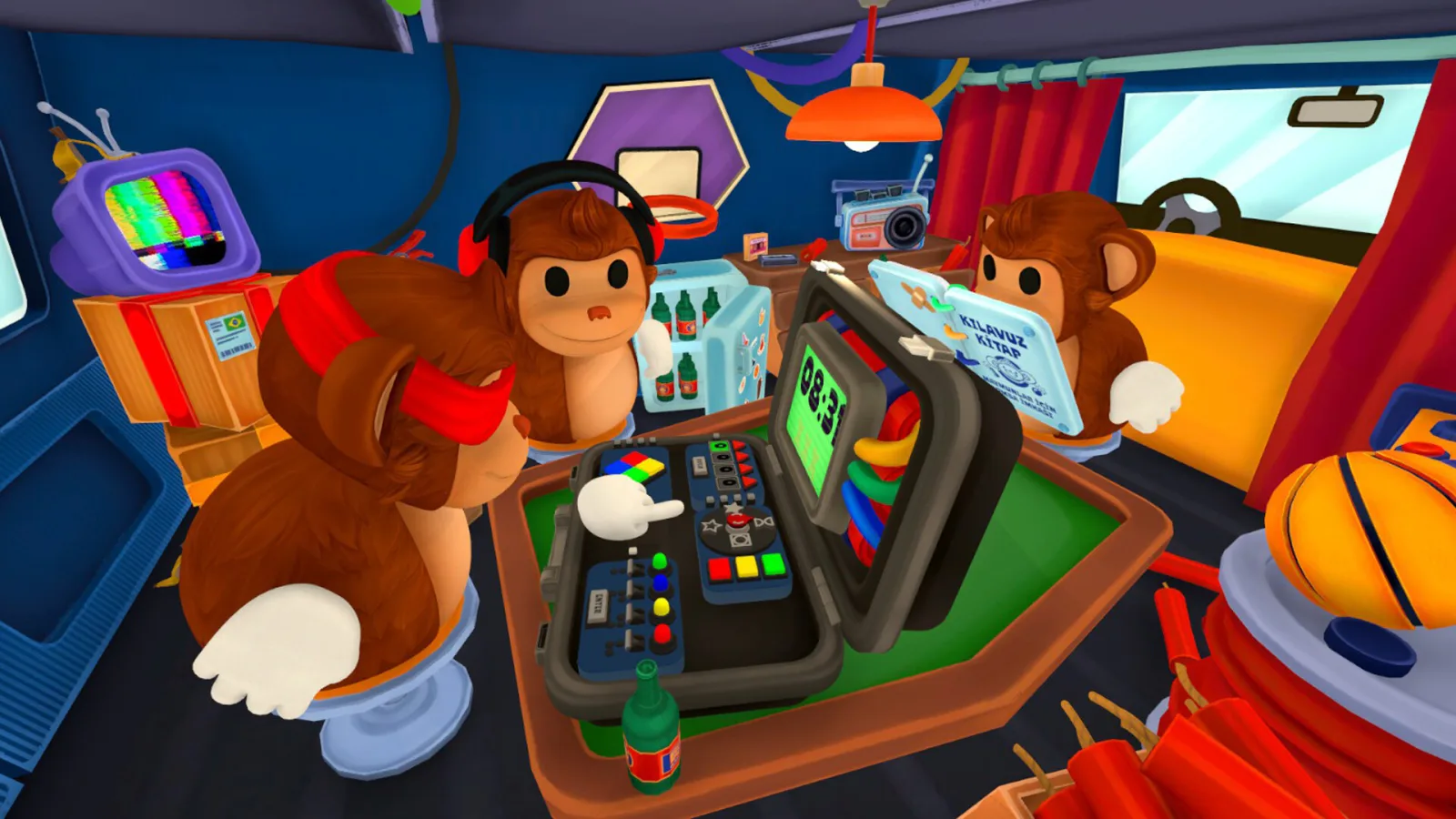
Effective communication is the lifeblood of this three-player co-op experience. Whether you are acting as the Blind, Deaf, or Mute monkey, your ability to bridge the gap between fragmented information determines your survival. Let's dive into how to optimize your workflow and dominate the game's challenging modules.
The Foundation of Efficient Communication
Before you even touch a wire or switch, your team must agree on a standardized language. Many groups fail because they lack a consistent way to handle inputs. By establishing a set of conventions early, you reduce the time spent on "what did you say?" and increase time spent on actual defusal.
Essential Pre-round Agreements
Convention
Description
Importance
Gesture Dictionary
Clear signs for yes, no, wait, and numbers 0-9.
Reduces reliance on voice when lines are noisy.
Perspective Lock
Left and right are always from the Blind Monkey's view.
Prevents confusion during critical wire cuts.
Order of Operations
Module name -> Position -> Details -> Manual Answer.
Prevents the Mute player from fumbling for the page.
The "Go-Back" Signal
A specific gesture to stop and re-evaluate an input.
Prevents panic-driven mistakes.
According to community reports, teams that treat the bomb as a "boring, robotic" process consistently perform better than those who try to improvise. When you prioritize structure over excitement, your success rate will naturally climb.
Decoding Modules with Precision
The bombanana simon says manual can feel overwhelming during your first few runs, especially when the timer is ticking down. The secret is to treat the manual not as a linear book, but as a collection of modular tools designed for specific scenarios.
Handling Logic-Heavy Modules
When dealing with complex modules like the Numpad or Switches, don't rush. The most common error is assuming the result of a calculation is the direct input. Often, the math is simply a stepping stone toward a final decision dictated by the manual.
The Golden Rule of Communication
Never input a command until the instructions have been repeated back by the Blind Monkey. This simple confirmation loop eliminates the vast majority of accidental explosions caused by misinterpretation.
Structural Strategy for Common Failures
Not every loss is a failure of logic; often, it is a failure of relay. When an answer travels from the Mute monkey, through the Deaf monkey, and to the Blind monkey, it can lose clarity along the way.
Common Failure Points and Solutions
Failure Type
Symptom
Fix
Rule Failure
Team doesn't know what to do with the information.
Review the specific module guide before the next round.
State Failure
Incorrect color, number, or position provided.
Slow down and perform a full re-read of the module.
Relay Failure
Information changes while being passed between players.
Use the "Repeat-Back" method for all instructions.
Attention Failure
Chaos or secondary modules distract from the task.
Assign one player to monitor the overall bomb status.
As noted by veteran players in the community, if the same mistake survives three consecutive runs, stop attempting to push through. It is time to pause and adjust the relay or role distribution.
Optimizing the Role Workflow
The Blind, Deaf, and Mute roles are not just flavor text; they fundamentally change how you interact with the game. If your team is struggling, don't be afraid to rotate roles. A player who struggles as the Mute monkey might be an exceptional Deaf player who excels at filtering noise.
Role Responsibilities
The Blind Monkey: The hands on the bomb. Focuses exclusively on the input and the physical state of the module.
The Deaf Monkey: The ears and the primary relay. Must process the Blind monkey's inputs and effectively convey them to the manual holder.
The Mute Monkey: The brain. Holds the bombanana simon says manual and determines the correct response. Must be able to distill complex instructions into clear, actionable steps.
Advanced Tactics: Managing Chaos
Once you have mastered the basics, you will start encountering secondary hazards. Chaos keeps the pressure high even when you think you have the modules under control. Always ask: "What needs attention now, and what information remains trustworthy?"
When a module becomes difficult simply because the team is interrupted, stop and diagnose the interruption. Do not attempt to force a solution while the team is under duress.
Mastering the Numpad and Math Modules
The Numpad is notorious for causing time haemorrhage. Remember these three critical points:
The keypad layout is jumbled—press the number itself, not the position.
The mathematical result is just a condition; wait for the manual to tell you which key to press.
If the result can be interpreted in two ways, the Mute monkey (who has the manual) makes the executive decision.
FAQ: Frequently Asked Questions
Q: Where can I find the most updated version of the manual?
A: Always refer to the in-game manual provided within the module. While community guides like this one for the bombanana simon says manual offer strategy, the game's live build is the ultimate source of truth.
Q: Why do we keep failing at the very last step?
A: This is usually due to "Attention Failure." Often, one player gets ahead of the team. Ensure you are following the "Confirm before Act" rule at every single step.
Q: Is it better to stick to one role or rotate?
A: Community reports suggest that rotating roles is the fastest way to learn. It gives everyone a perspective on the challenges faced by their teammates, leading to better overall communication.
Q: What should we do if we hit a wall in the Campaign?
A: Use the Custom mode to isolate the problematic module. Practice that specific mechanic until the team can execute it cleanly without external pressure. Once the procedure is internalised, return to the Campaign.
By following these structured guidelines and prioritizing clear, deliberate communication, you will find that the chaos of BOMBANANA! eventually yields to disciplined team play. Keep your callouts clean, confirm your inputs, and stay focused. Good luck!