Struggling with the Bombanana middle finger signal? Discover how to use gestures effectively, coordinate with your team, and defuse every bomb successfully.
Published:
Table of Contents
Have you ever found yourself screaming at your screen while playing BOMBANANA? You are certainly not alone; that iconic, accidental bombanana middle finger moment has become a rite of passage for every trio trying to master this chaotic Roblox experiment. Communication is the backbone of this game, and misinterpreting a simple gesture can lead to an instant, fiery explosion.
Understanding how to navigate the information triangle is vital for any group aiming to survive high-difficulty rounds. In this guide, we will break down why these communication breakdowns happen and how you can turn your team into a professional bomb-defusal squad.
The Information Triangle: Why You Keep Exploding
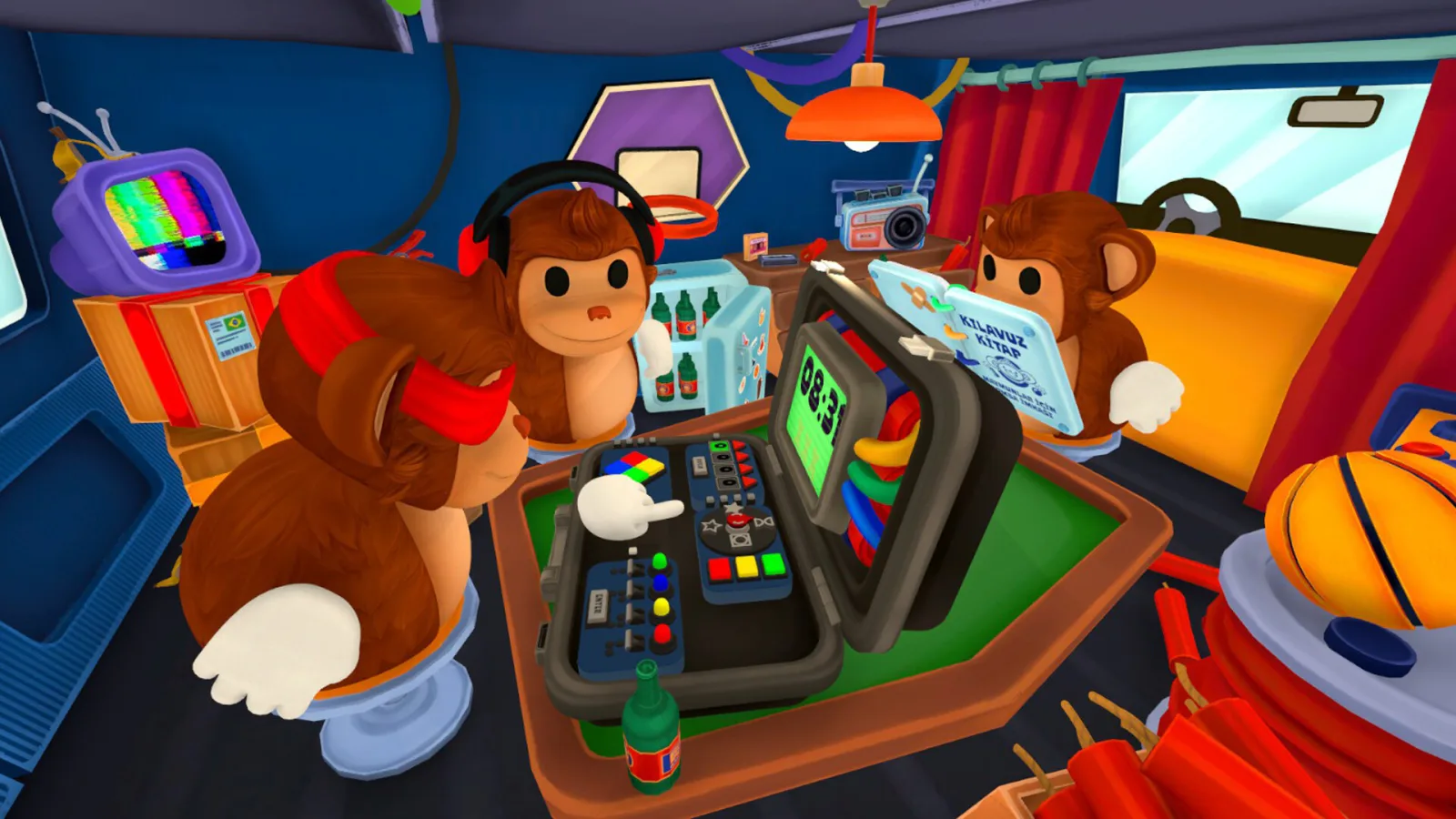
The core mechanic of BOMBANANA revolves around the restricted information flow between the Blind, Deaf, and Mute monkeys. When players ask "what does this gesture mean?", they are usually highlighting a flaw in the team's shared protocol.
According to TARK Games' official page, the game design intentionally restricts how you speak or see. This creates the "information triangle" where the Mute monkey interprets the manual, the Deaf monkey bridges the gap, and the Blind monkey executes the move. If one link fails—or if a gesture like the bombanana middle finger is sent instead of a clear directional command—the synchronization collapses.
Role Responsibilities Overview
Role
Primary Limitation
Core Task
Best Player Type
Blind
No vision; relies on touch
Execute final inputs
Patient, detail-oriented
Deaf
Cannot hear teammates
Bridge manual to bomb
Good short-term memory
Mute
Cannot speak at all
Read manual & gesture
Fast, clear communicator
Mastering Non-Verbal Communication
The bombanana middle finger is often just a symptom of a frustrated player trying to signal "stop" or "wait." To avoid this, your team must agree on a standardized gesture set before the timer even begins. Community reports suggest that many teams lose because they rely on improvisation rather than pre-agreed signals.
Essential Signal Protocol
Instead of guessing what a hand movement represents, adopt these industry-standard signals to reduce ambiguity during tense moments:
Nod/Thumbs Up: Represents "Yes" or "Confirm." Use this to lock in a specific slot or number.
Shake/Thumbs Down: Represents "No." Immediately kills a bad interpretation.
Finger Count: Used to identify slots (1st, 2nd, 3rd, 4th) before giving the action.
Repeat: A specific gesture (like a circular motion) meaning "send the last instruction again."
Hands Off: A vital signal for the Blind monkey to take their hands off the bomb until the team resolves a dispute.
Avoid Naked Numbers
Never just gesture the number "two." Always anchor it to an object. Say (or gesture) "Second slider, blue," rather than just "two." This eliminates the risk of Blind choosing the wrong control.
Why the "Middle Finger" Signal Happens (And How to Fix It)
Often, when a player is frustrated because they believe the team is working on the wrong module, they might use aggressive or unclear body language. In the heat of the moment, the Mute monkey—unable to explain themselves—might resort to wild gestures. If you see this happening, it is a sign that your team has drifted out of sync.
Troubleshooting Communication Failure
If your team is consistently failing, use this diagnostic table to identify where the "Middle Finger" frustration is coming from:
Symptom
Probable Cause
Corrective Action
Blind acts too early
Lack of "Hands Off" signal
Agree on a definitive "Ready" state
Mute gestures are confusing
Manual is still blocking view
Lower the manual before gesturing
Deaf reports wrong module
Mixing up module states
Only work on one module at a time
Blind touches wrong wire
Ambiguous "left/right"
Standardize perspective to Blind’s view
Step-by-Step Defusal Procedure
Success in BOMBANANA requires a disciplined, repeatable rhythm. Treat every round like a high-stakes operation.
Preparation Phase: Gather your trio. Assign roles based on who is best at reading, remembering, and executing.
The Anchor: Establish "Blind's perspective" as the default for all left/right calls.
Active Module: The Deaf monkey identifies the module state. The Mute monkey locates the rule.
Verification: The Mute monkey gestures the answer. The Deaf monkey repeats it aloud for the Blind monkey to confirm.
Execution: The Blind monkey performs the input.
Debrief: If you explode, don't rage-quit. Take 60 seconds to identify whether it was a misheard instruction or an incorrect lookup.
Debunking Common Myths About Communication
Many players believe that "talking more" solves communication issues. Community experience proves the opposite: clear, concise, and anchored communication is superior. If your Mute monkey is trying to explain complex math, you are already losing.
Myth 1: You need to solve the math puzzle as you see it. Fact: You need the result, not the process.
Myth 2: The Mute monkey should try to gesture everything. Fact: Use limited, pre-agreed signals.
Myth 3: Rotating roles makes you worse. Fact: Rotating builds empathy, helping you understand the constraints of the other seats.
FAQ: Surviving the Chaos
Q: Why does my team keep getting the bombanana middle finger signal?
A: It usually happens when a player is frustrated by a lack of clarity. Establish a "Full Stop" phrase or gesture to pause everything before the situation devolves into chaos.
Q: What is the hardest role to master?
A: The Deaf role is widely considered the hardest because it requires acting as the bridge between the Mute monkey's visual cues and the Blind monkey's physical actions, requiring significant short-term memory.
Q: Can we play with voice chat for the Deaf monkey?
A: While the game allows external voice, it defeats the purpose of the challenge. The restrictions are the core fun of the game; stick to the in-game mechanics to experience the intended design.
Q: How do we handle modules that change state?
A: Always finish one module before starting another. If a module state changes, treat it as a brand-new task and reset your communication cycle to ensure you aren't using stale information.