Master the BOMBANANA Piano Module: Notes and Strategy Guide
Learn how to solve the bombanana piano module with our complete guide. Master Braille octaves, note sequences, and team strategies for Level 9 and beyond.
Published:
Table of Contents
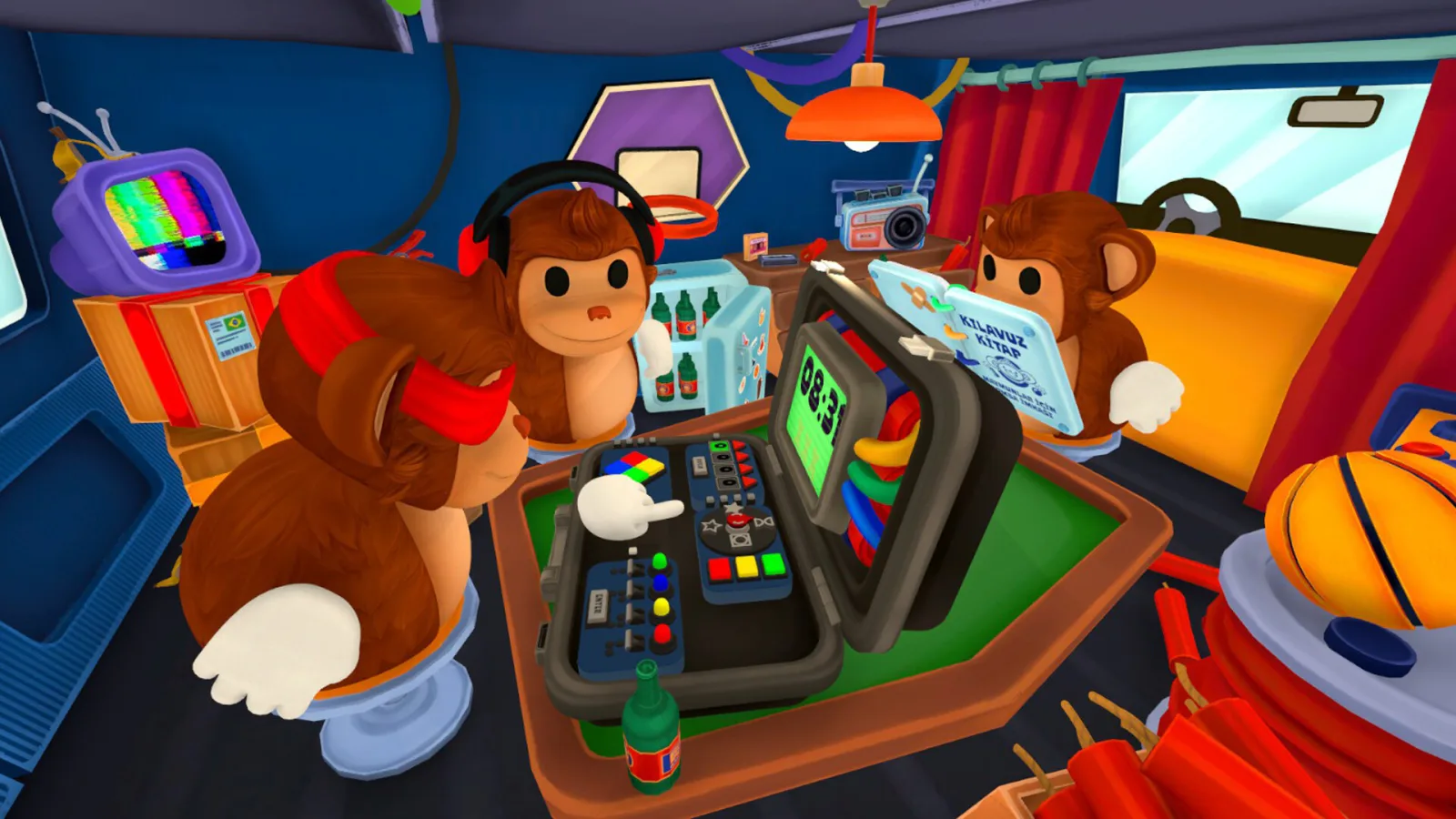
Successfully defusing a bomb in the high-stakes environment of TARK Games' Roblox hit requires more than just quick reflexes; it demands precise communication and a deep understanding of complex puzzles. Among the various challenges players face, the bombanana piano module stands out as a significant hurdle for teams reaching the mid-game content. First appearing as a fixed encounter in Level 9, this medium-difficulty module tests the coordination between the Blind, Mute, and Deaf roles like few others. Understanding the bombanana piano mechanics is essential for any squad looking to survive the transition from basic puzzles to the chaotic multi-module bombs of the later campaign.
Quick Answer
The Piano module requires players to identify a Braille octave number and an active LED color. These two inputs act as coordinates on a 7x4 grid found in the manual, which reveals a specific four-note sequence (e.g., C → E → G → C). The Blind player must then play these notes in the exact order provided to clear the module.
Understanding the BOMBANANA Piano Mechanics
The Piano module is visually distinct, featuring a small keyboard, a Braille display representing an octave number, and a colored LED light. Unlike simpler "press the button" tasks, this is a multi-step lookup puzzle where the information is intentionally fragmented across different player perspectives.
In the standard BOMBANANA team structure, the division of labor is strict. The "Deaf" player usually sees the module but cannot hear the instructions clearly, while the "Blind" player interacts with the controls but cannot see the visual cues. The "Mute" player holds the manual but cannot see the bomb. To solve the piano, the team must synthesize three distinct pieces of data:
The Braille Octave Number: A tactile or visual code (1 through 7) displayed on the module.
The Active-Light Color: A single LED that glows Red, Yellow, Green, or Blue.
The Note Sequence: A four-note melody derived from the intersection of the number and the color in the manual.
The Importance of the "Packet"
Community reports emphasize that the greatest cause of failure isn't the difficulty of the notes, but the fragmentation of the "packet." A packet is the complete set of data required for a solve. If the Mute player receives the Braille number but has to wait thirty seconds for the light color, the state of the bomb may change, or the team may lose the rhythm of the defusal. Professional teams treat the Braille number and the light color as a single, inseparable unit of information.
Component
Responsible Role
Purpose
Braille Octave
Blind/Deaf
Determines the Row in the manual table.
LED Color
Deaf
Determines the Column in the manual table.
Note Sequence
Mute
The final answer extracted from the manual.
Physical Input
Blind
The execution of the notes on the keyboard.
The Complete Note Sequence Lookup Table
Based on the current in-game manual and verified community documentation, the following table represents the 28 possible note sequences. Players should use the Braille number to find the correct row and the LED color to find the correct column.
Note: Always verify these sequences against your live in-game manual, as TARK Games may update these values in future patches.
Braille Row
Red Sequence
Yellow Sequence
Green Sequence
Blue Sequence
1
C → D → E → C
C → E → G → C
C → D → E → F
E → E → F → G
2
G → E → E → F
F → A → C → F
G → A → B → C
A → E → A → B
3
C → C → G → G
G → B → D → G
E → F → G → A
C → D → C → E
4
E → D → C → D
E → C → D → G
D → F → A → D
G → C → G → E
5
A → B → C → A
A → G → A → F
C → G → C → G
B → G → A → B
6
G → F → E → D
B → A → G → F
F → E → D → C
D → E → D → C
7
B → F → G → A
D → C → B → A
G → B → A → G
A → B → A → G
How to Use This Table Effectively
When the Deaf player identifies the module, they should immediately call out "Piano." This alerts the Mute player to flip to the correct section of the manual. The next step is the simultaneous relay of the row and column. For example, "Braille 3, Green light." The Mute player then finds the intersection: E → F → G → A.
Viewpoint Translation
The Deaf player might see the keyboard from a different angle than the Blind player. Before the Blind player starts pressing keys, the Deaf player should translate the note names (C, D, E...) into physical positions (e.g., "First white key," "Third white key") to avoid confusion.
Communication Workflow and Team Roles
The bombanana piano module is a test of the "Blind-Mute-Deaf" communication loop. If this loop breaks, the timer will likely expire before the sequence is completed. According to experienced players, the following workflow is the most efficient way to handle the module under pressure.
The Mute's Responsibility: The Lookup
The Mute player is the gatekeeper of the rules. They must resist the urge to guess. If the Deaf player only provides the light color, the Mute should stay silent and wait for the Braille number. Providing seven different possible sequences for one color only clutters the voice channel. Once both values are received, the Mute should state the four notes clearly and once.
The Deaf's Responsibility: The Relay
The Deaf player acts as the bridge. They see the LED and the Braille, but they also see the Blind player's hands. Their job is to ensure the Blind player is hovering over the correct keys. If the Mute says "C," the Deaf player should confirm the Blind player is touching the 'C' key before the Blind player presses it.
The Blind's Responsibility: The Execution
The Blind player is the one who actually clears the module. Because they cannot see the visual cues, they rely entirely on the verbal relay. A common mistake is for the Blind player to start pressing keys as soon as they hear the first note. In the bombanana piano module, it is safer to hear all four notes first, repeat them back to the team to ensure accuracy, and then execute the sequence.
Step
Action
Role
1
Identify module and call "Piano."
Deaf
2
Report Braille number and LED color.
Deaf/Blind
3
Locate sequence in manual and announce notes.
Mute
4
Translate notes to physical key positions.
Deaf
5
Repeat sequence and press keys.
Blind
6
Confirm module clear.
All
Campaign Progression: Level 9 and Level 10
The introduction of the Piano module in Level 9 marks a shift in the game's difficulty curve. In earlier levels, modules are often "Easy" and can be solved by a single player with minimal input from others. Starting at Level 9, the game forces cooperation.
Level 9: The First Encounter
In Level 9, the bomb consists of a Random Easy module and the Piano module. The "Chaos" factor here is Pressure. Pressure doesn't directly interfere with the Piano's mechanics, but it adds a psychological weight to the 3-minute and 30-second timer. Teams should use Level 9 as a practice ground to stabilize their Piano callouts.
Level 10: Increasing the Stakes
Level 10 introduces the Alarm chaos factor and pairs the Piano with a Symbol module. The time limit is increased to 4 minutes, but the Alarm can be highly distracting, making it difficult to hear the Mute's note callouts.
Level Comparison Table:
Level
Time Limit
Modules
Chaos Factor
Level 9
3:30
Random Easy + Piano
Pressure
Level 10
4:00
Symbol + Piano
Alarm
Level 11+
Varies
Random Medium (Includes Piano)
Varies
Chaos Events
If a Chaos event (like an Alarm or a blackout) occurs while you are mid-sequence on the Piano, stop immediately. Do not try to finish the sequence from memory. Once the Chaos is cleared, re-verify the LED color. Some community reports suggest that certain events can reset the module state, making your old four-note packet invalid.
Common Pitfalls and Troubleshooting
Even veteran teams can fail the bombanana piano if they become complacent. Analyzing "failed runs" from community recordings reveals several recurring mistakes that are easily avoidable.
1. The "Memory Trap"
A player might remember that "Braille 1 + Yellow" was "C-E-G-C" from a previous run. However, relying on memory instead of a fresh manual lookup is dangerous. If the game updates or if the player misremembers a single note, the result is a strike. Always perform a fresh lookup for every new bomb.
2. Ambiguous Note Names
In the heat of the moment, "B" and "D" or "E" and "G" can sound similar over voice chat.
Solution: Use phonetic descriptors or key positions. Instead of just saying "B," say "B, the last white key."
Solution: The Blind player should always repeat the full sequence back to the team before pressing anything.
3. Missing the LED Color
It is surprisingly common for teams to call out the Braille number and then immediately start trying to guess the notes without checking the LED. As shown in the lookup table, a single Braille row has four completely different answers depending on the color.
4. Recovery After Interruption
If the team is interrupted by a different module needing urgent attention, the Piano packet should be treated as "expired."
Step 1: Call "Hands off" to the Blind player.
Step 2: Re-read the Braille and the Light.
Step 3: Re-confirm the sequence with the Mute.
Step 4: Restart the four-note input from the beginning.
Practical Practice Exercises
To master the bombanana piano, teams should practice their callouts outside of high-pressure campaign runs. One effective method is "Role Rotation." By switching between Blind, Mute, and Deaf, each player gains an appreciation for the information limits of their teammates.
The Mute learns how important it is to have a clear, quiet environment to read the table.
The Deaf learns how difficult it is to translate "Notes" into "Physical Actions" for someone who can't see.
The Blind learns to trust their teammates and wait for confirmation.
Another exercise is the "Deliberate Interruption." While practicing a Level 9 bomb, one player should call out a fake emergency halfway through the Piano sequence. The team must then practice the "Hands off" and "Re-verify" procedure to ensure they can recover without taking a strike.
Conclusion
The Piano module is a cornerstone of the BOMBANANA experience, representing the perfect blend of logic, observation, and teamwork. By treating the Braille number and LED color as a unified packet of information and maintaining a disciplined communication loop, any team can turn this "Medium" challenge into a routine success. As you progress toward Level 10 and beyond, these habits will become the foundation of your success against even more complex modules.
FAQ
What happens if I press the wrong note on the bombanana piano?
Pressing an incorrect note in the sequence will typically result in a strike and may reset the sequence. You must re-consult your team to determine if the Braille number or LED color has changed before attempting the sequence again. Most "community reports" suggest that a strike often forces a total reread of the module state.
Does the bombanana piano appear in every level?
No, the Piano module first appears as a fixed requirement in Level 9. After that, it becomes part of the "Random Medium" module pool, meaning it can appear in various levels depending on the game's procedural generation for that specific run.
Can the Blind player solve the piano alone?
Technically, no. The Blind player cannot see the Braille octave number or the LED color, which are required to find the correct note sequence in the manual. The bombanana piano is designed specifically to require at least two, and ideally three, players to cooperate.
Is there a way to skip the Braille lookup?
There is no legitimate way to skip the Braille lookup. The Braille number is a fundamental coordinate for the 7x4 note table. Attempting to guess the sequence without the Braille number gives you only a 1 in 7 chance of being correct for any given color, which is a high-risk strategy that usually leads to a strike.