BOMBANANA Manual Guide: Master the Art of Three-Player Defusal
Struggling with comms in BOMBANANA? Discover the ultimate BOMBANANA manual guide to coordinate roles, solve complex modules, and stop the clock effectively.
Published:
Table of Contents
BOMBANANA is more than just a puzzle game; it is an intense test of communication, coordination, and patience for you and two friends. If your team is constantly failing because information is being lost in translation, mastering the BOMBANANA manual is the single most important step you can take to stop the explosions.
Effective teamwork in this game relies on understanding that the "manual" is not just a reference book, but a bridge between three distinct perspectives. By treating the game’s mechanics as a structured relay, your group can move from chaotic guessing to consistent, professional-grade defusals.
Understanding the Three-Player Dynamic
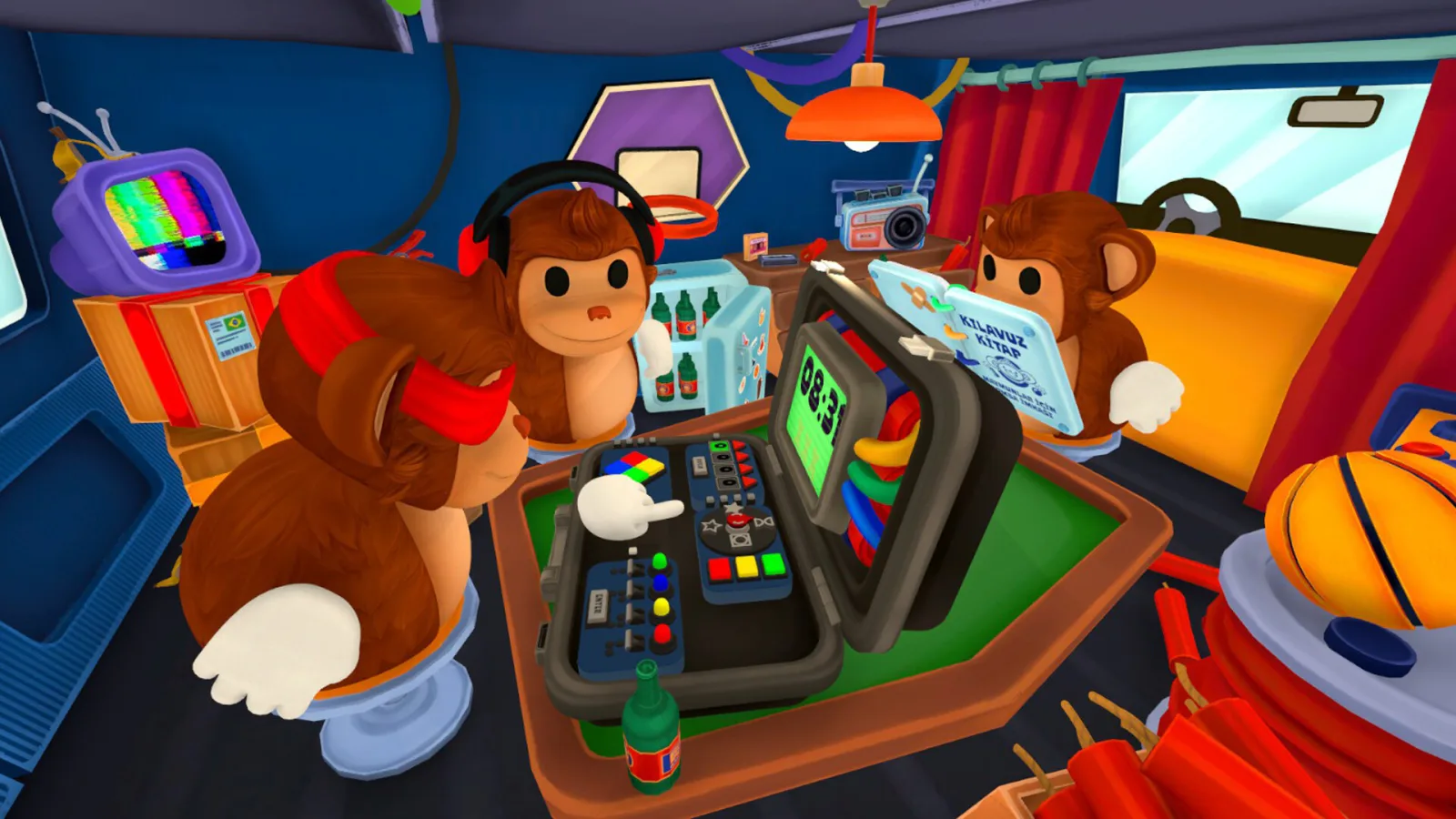
In BOMBANANA, you are not just solving puzzles; you are managing a flow of information across three specific roles. Because players have restricted senses, the data path often breaks down before it reaches the person who needs to act.
Based on community reports, the most common point of failure is not a lack of logic, but a "relay failure" where the meaning of a signal changes as it moves from one player to the next.
Role
Primary Responsibility
Critical Limitation
Blind
Interacting with the bomb
Cannot read the manual or see the whole board
Deaf
Providing initial visual state
Cannot hear manual instructions or feedback
Mute
Holding the manual guide
Cannot speak to confirm actions
To succeed, you must agree on a gesture dictionary before the timer starts. Whether you use in-game emotes or voice chat shorthand, establishing clear signals for "yes," "no," "repeat," and "wait" prevents the panic that leads to premature input errors.
The Professional Callout Structure
A common mistake beginners make is shouting random colors or numbers the moment they see them. To use the BOMBANANA manual effectively, you need a standardized "Universal Callout." This robotic, disciplined approach ensures that the Mute Monkey can find the right page without wasting precious seconds.
The Perfect Callout Formula
Always lead with the Module Name and Position. Never skip this, as the manual holder needs to identify the page instantly. Follow with the state, the expected answer, a repeat-back from the handler, and finally, the confirmed input.
When you simplify your communication, you remove the guesswork. Instead of saying, "There's something flashing and red," clearly state: "Wires, top-left. Four wires. Colors: Green, Yellow, Blue, Red. LED is flashing red. Awaiting manual confirmation."
Module-Specific Strategies
Different modules require different logical approaches. According to BOMBANANA! official game page, the game rewards teams that prioritize stability over speed.
Cable and Wire Modules
The wires are your bread and butter. Always count the total wires before reading colors. A four-wire module has different rules than a three-wire one, and assuming they are the same is a leading cause of failure.
The Numpad (Maths) Module
This is where most teams lose their streak. The keypad is intentionally jumbled. Do not assume the position of a number matches your keyboard. The handler must provide the state, but the manual holder should always provide the final decision, especially when the solution involves choosing between "Odd" or "Even" logic branches.
Switch Panels
Switch panels require multi-step state verification. Never rush to hit the "Enter" button. Confirm every switch state individually with the team. If you realize an earlier switch was set incorrectly, use your pre-agreed "Go-Back" signal immediately rather than guessing the final state.
Diagnosing Failure Types
When the timer hits zero, don't just restart. Use the explosion as a diagnostic tool. By categorizing why you failed, you can improve your process for the next run.
Failure Type
Description
Suggested Fix
Rule Failure
The team didn't understand the manual
Review the specific Module Guide
State Failure
A color or number was misread
Slow down the initial data collection
Relay Failure
Data changed while being communicated
Establish stricter callout protocols
Attention Failure
Chaos mechanics interrupted the solve
Prioritize module focus and timers
If the same mistake occurs three times, stop playing. You have enough evidence to identify a structural weakness in your communication. Change your role assignments—sometimes a player who struggles as the Mute Monkey thrives as the Blind Monkey.
Scaling from Campaign to Endless
The 30-level Campaign is your training ground. Use it to build a shared language. Do not worry about "clearing" a level quickly; worry about clearing it without a single miscommunication.
Once you transition to Endless or Custom modes, the timer pressure will increase. At this point, the game shifts from "How do we solve this?" to "What needs our attention right now?" If you find yourself stuck, return to the Campaign checkpoint that covers that specific module. Mastering the basics in the Campaign will pay off when the pressure in Endless mode becomes overwhelming.
[!SUMMARY]
Key Takeaways for Success
Prioritize Stability: A slow, correct move is better than a fast, wrong one.
Standardize Everything: Use a consistent callout structure for every module.
Rotate Roles: If a team member feels stuck, swap positions to gain a new perspective on the manual.
Don't Panic: When an error occurs, pause, clear the state, and start the read-out from the very beginning.
FAQ: Mastering the BOMBANANA Manual
Q: How many players do I need to play BOMBANANA?
A: The game is specifically designed for three players. Trying to play with fewer often leads to "Attention Failure" because you are forced to manage two roles at once.
Q: Is there an easy way to read the manual?
A: Use the BOMBANANA manual as a set of doors. Only open the page that matches the module currently on the bomb. Avoid describing the whole bomb at once; focus only on one module at a time to keep the Mute Monkey’s information manageable.
Q: Why does the answer seem impossible even when we follow the manual?
A: This usually happens when the "state" has become stale. If a teammate misread a color or a position, the manual will give you the wrong answer. Always re-verify your input data before blaming the manual or the module logic.
Q: What should I do if my team is arguing during a run?
A: Stop the clock. Take a breath and agree on a naming convention for the shapes or colors you are seeing. If you cannot agree on a name for a symbol, you will never successfully communicate it under pressure. Alignment is part of the challenge.