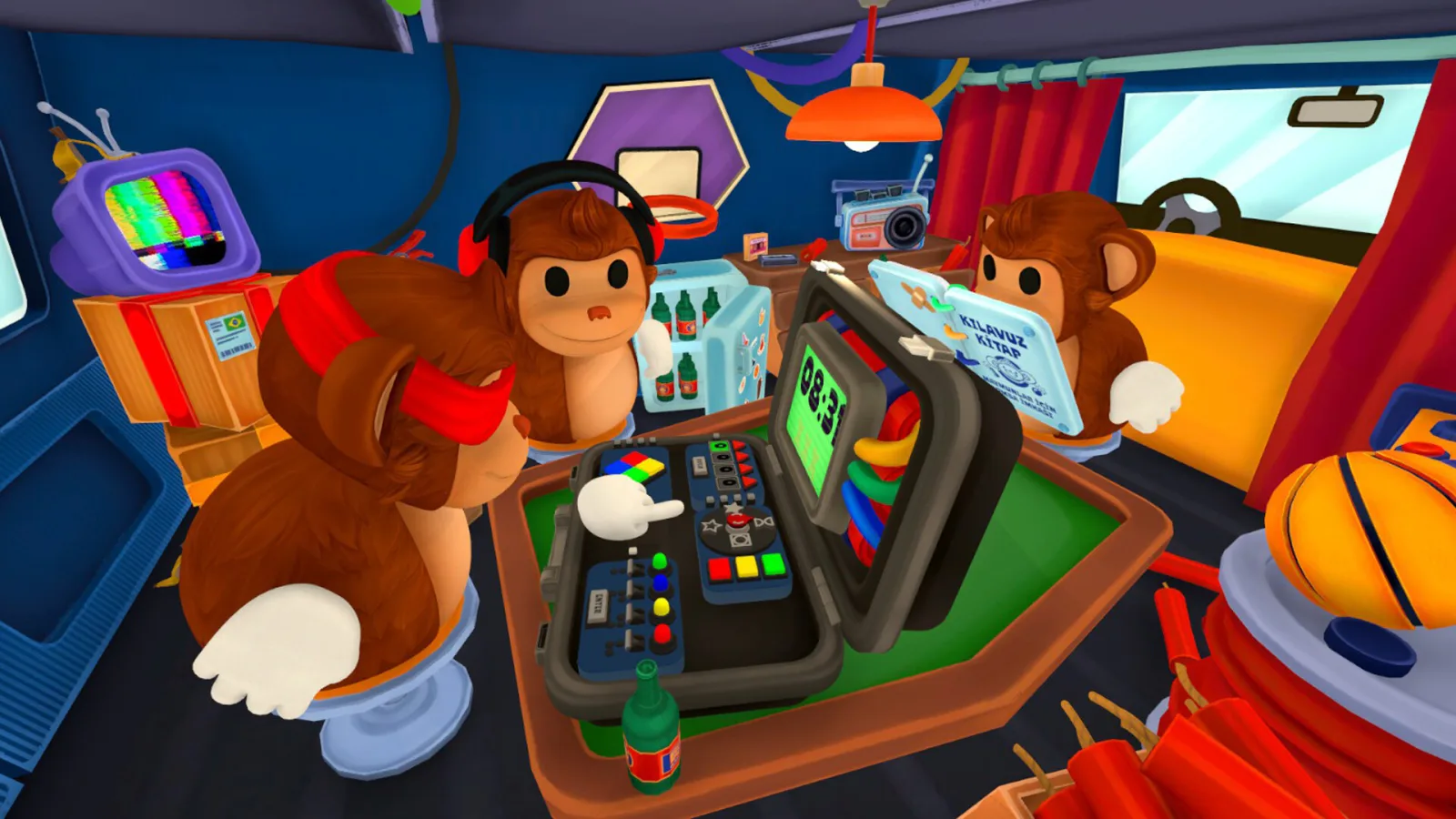
Mastering the Bombanana Dice Module: Pro Tips for Trio Teams
Struggling with the Bombanana dice and complex modules? Discover expert strategies to coordinate your trio, improve callouts, and ace every bomb defusal.
Published:
Table of Contents
Introduction to Bombanana Coordination
In the fast-paced, high-stress environment of TARK Games' BOMBANANA!, your success hinges on one thing: how well your trio of monkeys can synchronize. While many players obsess over finding a specific bombanana dice solution or a universal answer key, the reality is that victory comes from communication architecture, not just rote memorization. Whether you are dealing with complex logic puzzles or the infamous "Bombanana dice" scenarios that stump new squads, this guide will help you transform your team's chaos into a well-oiled defusal machine.
Understanding your role—Blind, Deaf, or Mute—is the foundation of your success. If your team treats the game like three individual puzzle-solvers, you will lose every time. Instead, you must function as a single entity where information flows seamlessly through the limitations imposed by the game.
The Foundation of Effective Communication
Before you even touch a controller, your team needs a shared language. Community reports consistently show that squads who define their "gesture dictionary" during the pre-round phase have a significantly higher clear rate.
Essential Pre-Round Agreements
Protocol
Strategy
Why it Matters
Gesture Code
Assign finger counts (1-9) to specific wires/numbers
Eliminates verbal ambiguity under pressure
Left/Right Rule
Always use the Blind Monkey’s perspective
Prevents disorientation when describing layouts
Repeat-Back
No action occurs until the instruction is repeated
Acts as the final safety net against errors
Fixed Rotation
Call out modules in a clockwise or top-to-bottom order
Keeps the Mute on the correct manual page
As many expert players have noted, a "boring and robotic" team is a winning team. Don't try to be creative with your callouts; be predictable. When the Mute knows exactly which module is coming next based on your fixed rotation, they don't have to waste precious seconds hunting through the manual.
Mastering Complex Modules and State Management
The core challenge in BOMBANANA! is "state failure"—where a piece of information, such as the value of a bombanana dice roll or a slider position, becomes stale. When the bomb’s state changes, relying on outdated info is the fastest way to get a game over.
Troubleshooting Your Workflow
Rule Failure: If you can see the panel but don't understand the logic, open the specific module guide. Do not guess; the manual exists for a reason.
State Failure: If a value like a number or color was read incorrectly, force a full restart of that module's callout.
Relay Failure: If the information is correct in the manual but loses its meaning while passing from the Mute to the Blind, simplify your verbal descriptions.
[!TIP]
The "Full Stop" Rule
If a mistake is made, stop immediately. Do not try to "fix it on the fly." Reset the module, re-read the state, and start the callout process from the beginning to ensure the team is synced.
The Role of the Narrator: Leading the Trio
The Deaf Monkey acts as the central data processor. You aren't just reading symbols; you are the bridge between the Mute’s manual knowledge and the Blind’s tactile execution. According to player experience, the most successful Deaf monkeys are those who maintain a steady, non-stop flow of narration.
When the Mute makes a gesture, narrate it: "He’s pointing to the blue wire." This creates a loop of confirmation that keeps the Blind monkey from panic-cutting. If you stop talking for even a few seconds, you create a vacuum that often leads to internal team confusion.
Communication Checklist for Success
Identify: Call the module name and position first.
State: Report the current values (lights, colors, numbers).
Cross-Reference: Mute verifies with the manual.
Confirm: Blind repeats the command.
Execute: Proceed only after the "Clear" signal.
Why Your Trio Should Rotate Roles
One of the biggest mistakes groups make is staying in the same role for hours. By rotating who plays Blind, Deaf, or Mute, you gain empathy for each other's limitations. If you’ve spent an hour as the Blind monkey, you understand exactly why you need short, clear descriptions rather than long, rambling sentences. This versatility is what separates an average squad from a leaderboard-topping team.
Role Responsibility Matrix
Role
Primary Skill Needed
Key Responsibility
Blind
Tactile focus/Patience
Execute actions only after double-confirmation
Deaf
Verbal clarity/Speed
Act as the central narrator for the team
Mute
Manual navigation
Maintain a stable, predictable callout sequence
Learning the Game via Progression
The BOMBANANA! Campaign is designed to teach you, not just to test you. Use the first few levels to solidify your language. If you find yourself consistently failing on a specific module, use Custom mode to practice that exact puzzle until your team can clear it in silence.
For the latest updates and to download the official companion materials, always check the Official BOMBANANA Game Hub. Mastering the mechanics, including the nuances of the bombanana dice interactions, requires patience and repetitive practice. Remember, the game is not about being the fastest; it is about being the most consistent.
FAQ: Frequently Asked Questions
Q: Is there a secret trick to the Bombanana dice module?
A: There is no "cheat" code, but the key is maintaining state consistency. Ensure the Blind player confirms the symbols and colors before the Mute player provides the final instruction.
Q: Can we use external voice chat like Discord?
A: While possible, community experts strongly advise against it. The game is designed to force synergy through restrictions. Breaking these limitations turns the game into a standard puzzle simulator, stripping away the unique charm and challenge of the Blind, Deaf, and Mute dynamic.
Q: Why do we keep failing on the Numpad module?
A: Players often assume the answer to the math is the button to press. Often, the math is just one step in a larger process. Wait for the Mute monkey to confirm the final instruction based on the LED color and the math result before hitting any buttons.
Q: What should we do if our team enters a loop of failing?
A: Stop the clock. Take a two-minute break to discuss where the breakdown occurred. Was it a communication error? A misunderstanding of a rule? Once you diagnose the "why," the "how" of fixing it becomes much clearer.